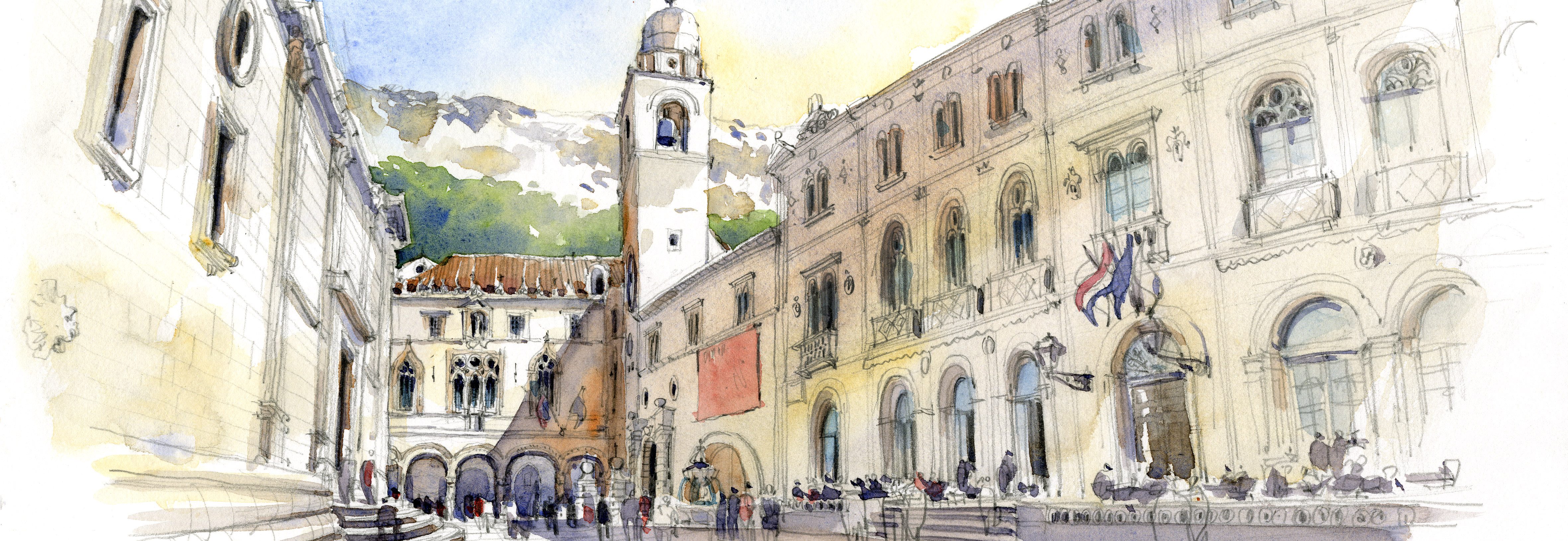
I’m pretty bad about keeping up a daily practice of just about anything…diet, exercise, sketching, blogs–you get the idea. But during these dark days of a Seattle winter, I realized that my sketching skills were getting a bit rusty. To keep the gears oiled, I decided to work from photos in a sketchbook in my studio. It’s been good practice, and I’ve been posting the sketches on IG and FB, but in so doing, I noticed that there is a big difference between the studio sketches and the ones I do on location. Here is a perfect example.
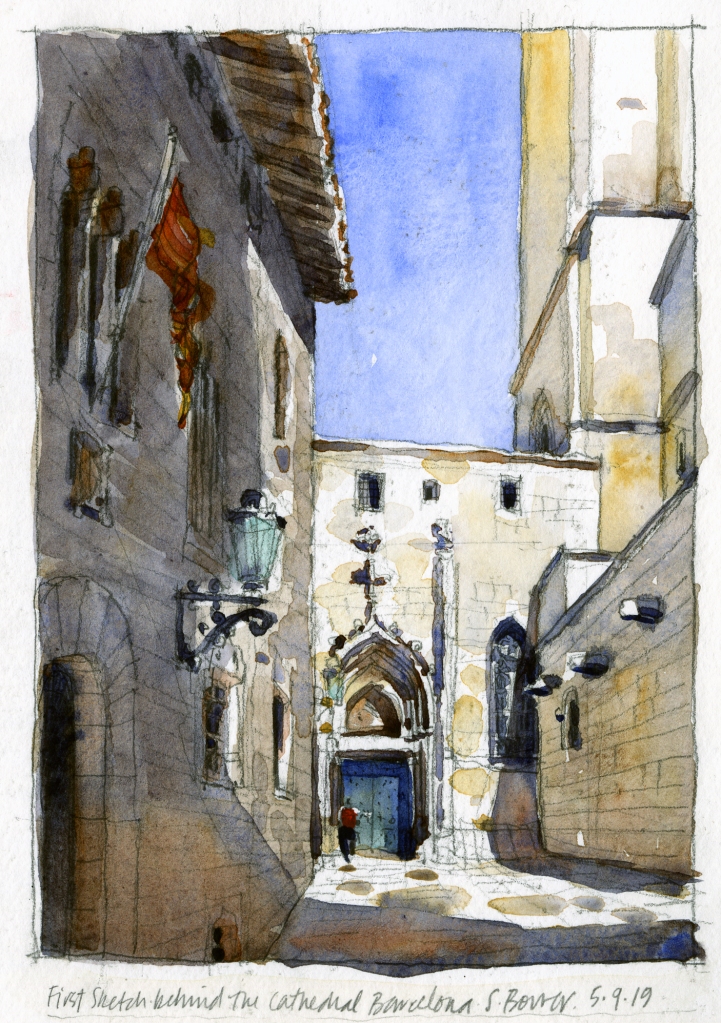
The sketch above was done on location one sunny morning sitting in a corner on the backside of the Catedral in Barcelona in 2019. Yes, I can feel the heat, remember the sounds of the people walking by…all those details that are magically infused into a live, on location sketch.
The sketch below on the right is the same scene, done a few days ago in my studio in Seattle from a photo that I took. A big difference that I didn’t realize until well after it was done. Why so different?
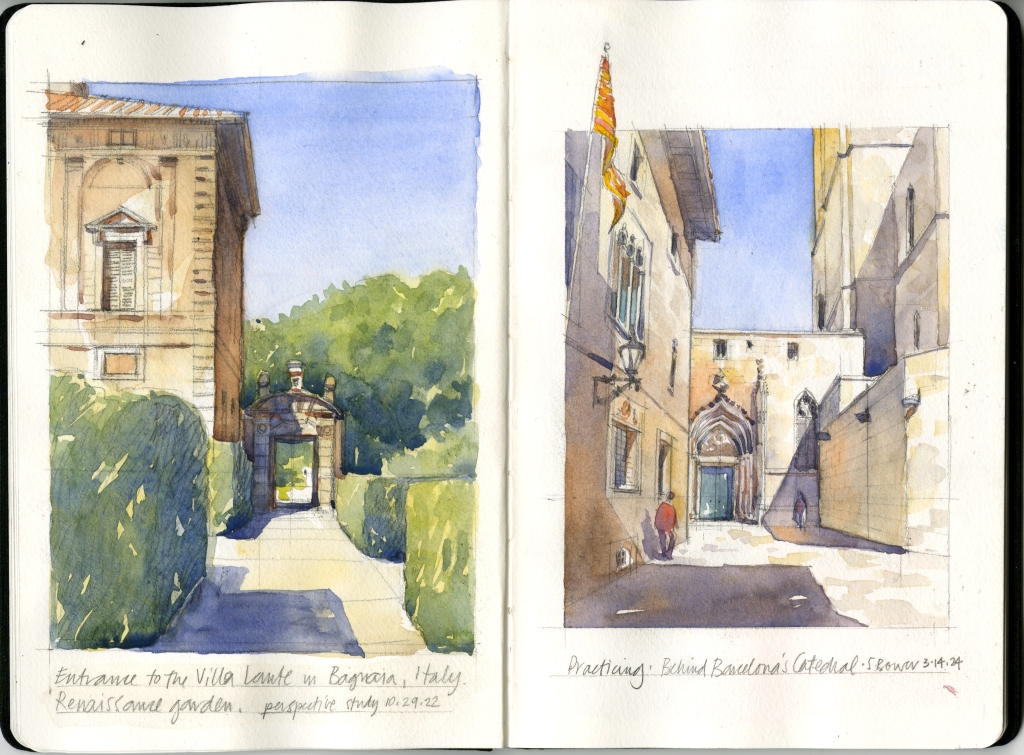
In many ways, working in the comfort of a warm and dry studio is easier than battling the elements, the truck that blocks your view and all the things we urban sketchers deal with when working out in the world. I think that’s why my studio image, while I like it a lot, is calmer, has more subtle watercolor washes, etc. But it also lacks the energy, contrast, and I don’t know what else that the on-site sketch has–that energy infused into a sketch is a bit part of why I love being an urban sketcher. It’s less about making pretty art and more about capturing the experience. But studio work is great to do too, and pretty art is wonderful…and it’s certainly good practice for me. We are always working on improving what we do, right?
And if you are curious, that is an Escoda sketchbook (approx. 5″ x 8″) that was given to me and small group when we visited the Escoda factory a few years ago. The paper buckles a bit under the wet washes, but it does take the color and pencil work nicely. I hope to fill this book with small studio sketches!
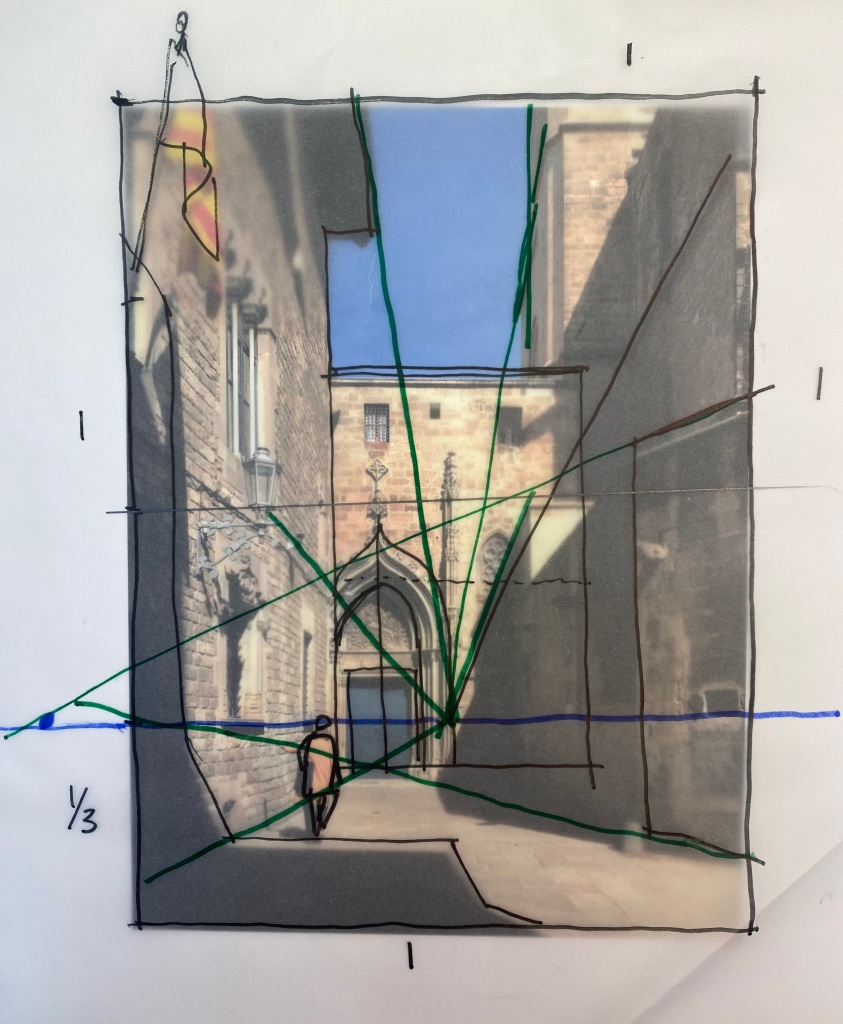
Anyone who has ever done one of my workshops knows that I love teaching how to analyze the proportions and perspective in any view I sketch (does anyone else do this?), so I had to include the analysis for this one. 🙂


 Drawing Perspectives